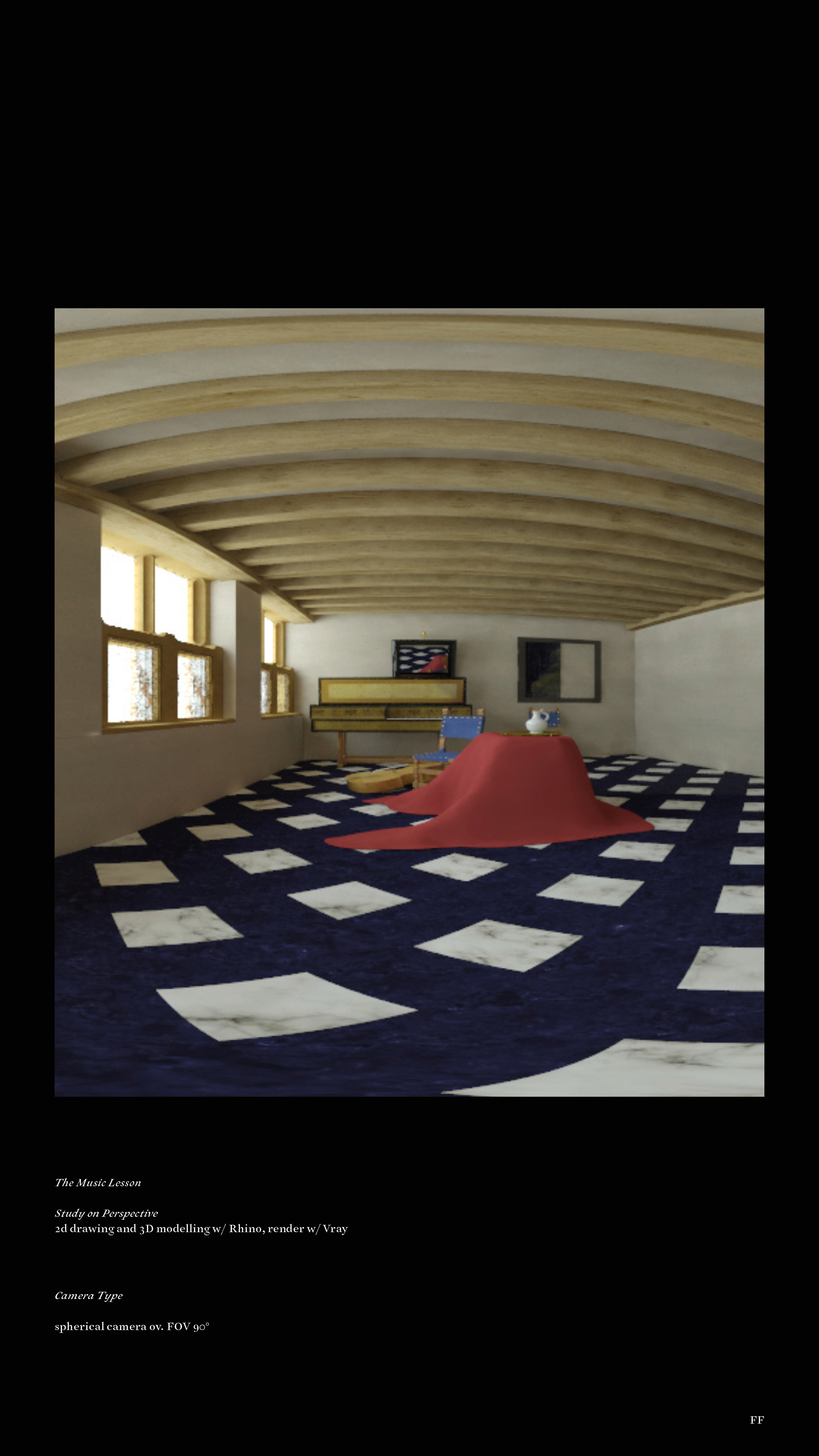
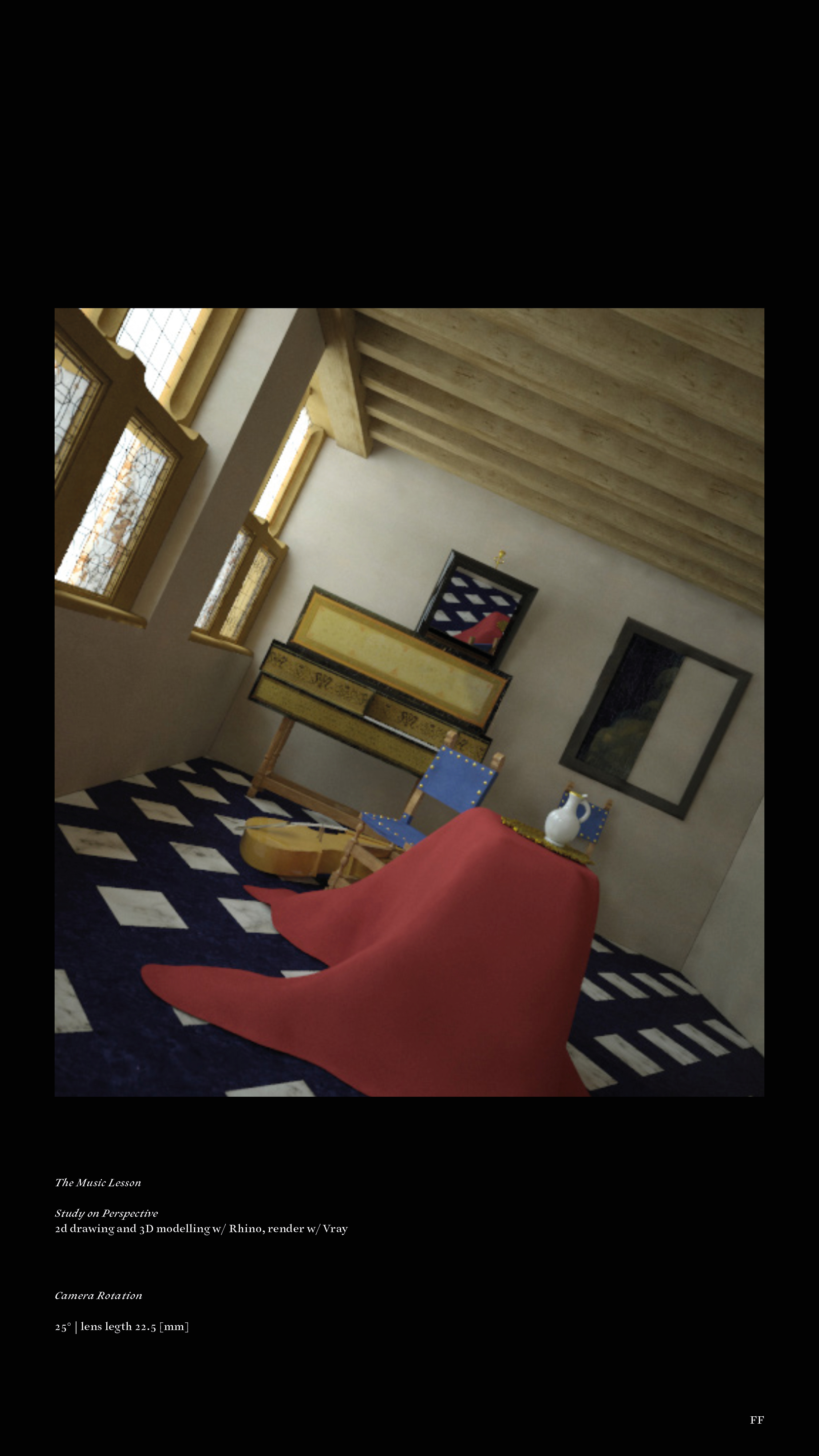
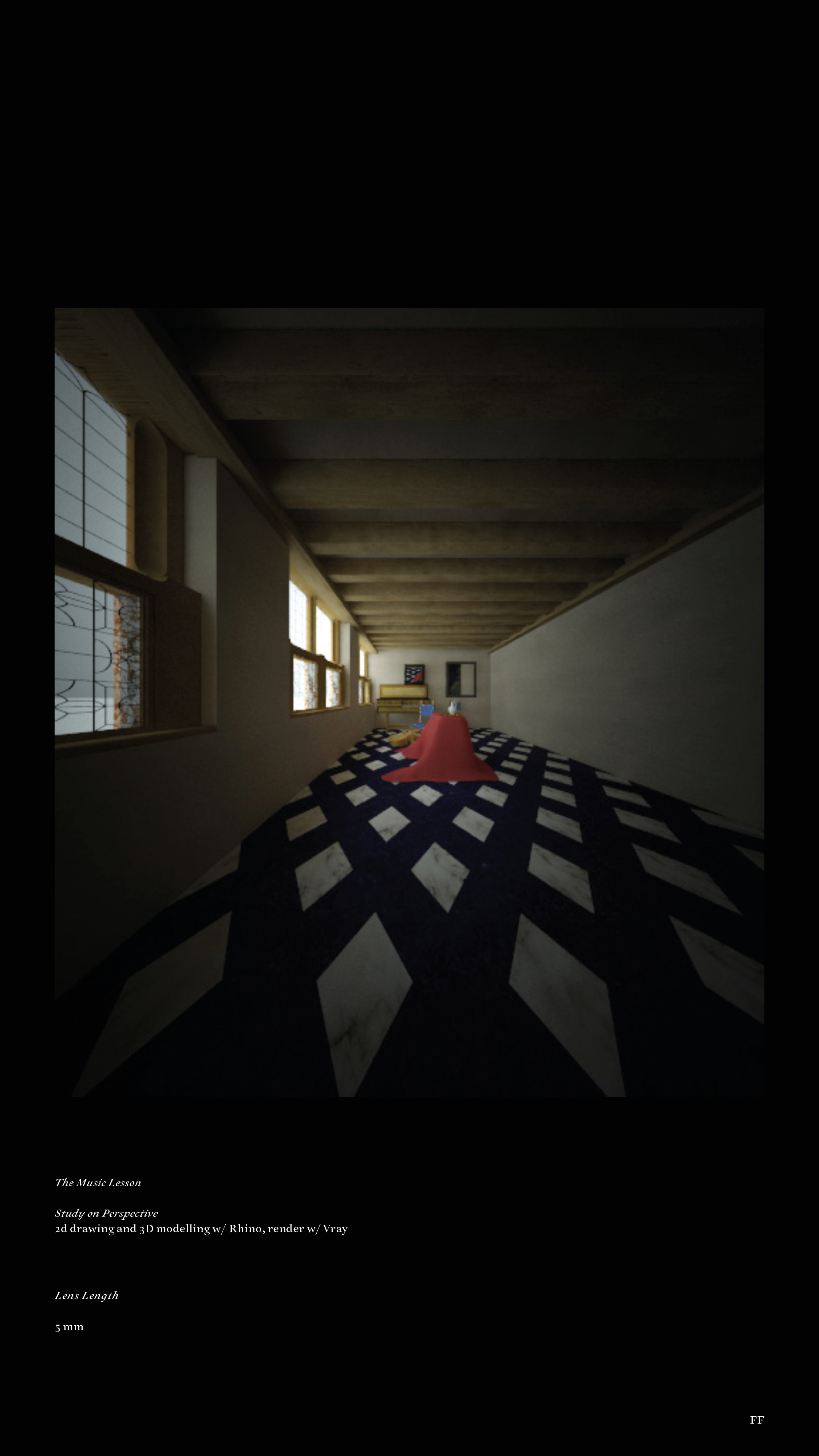
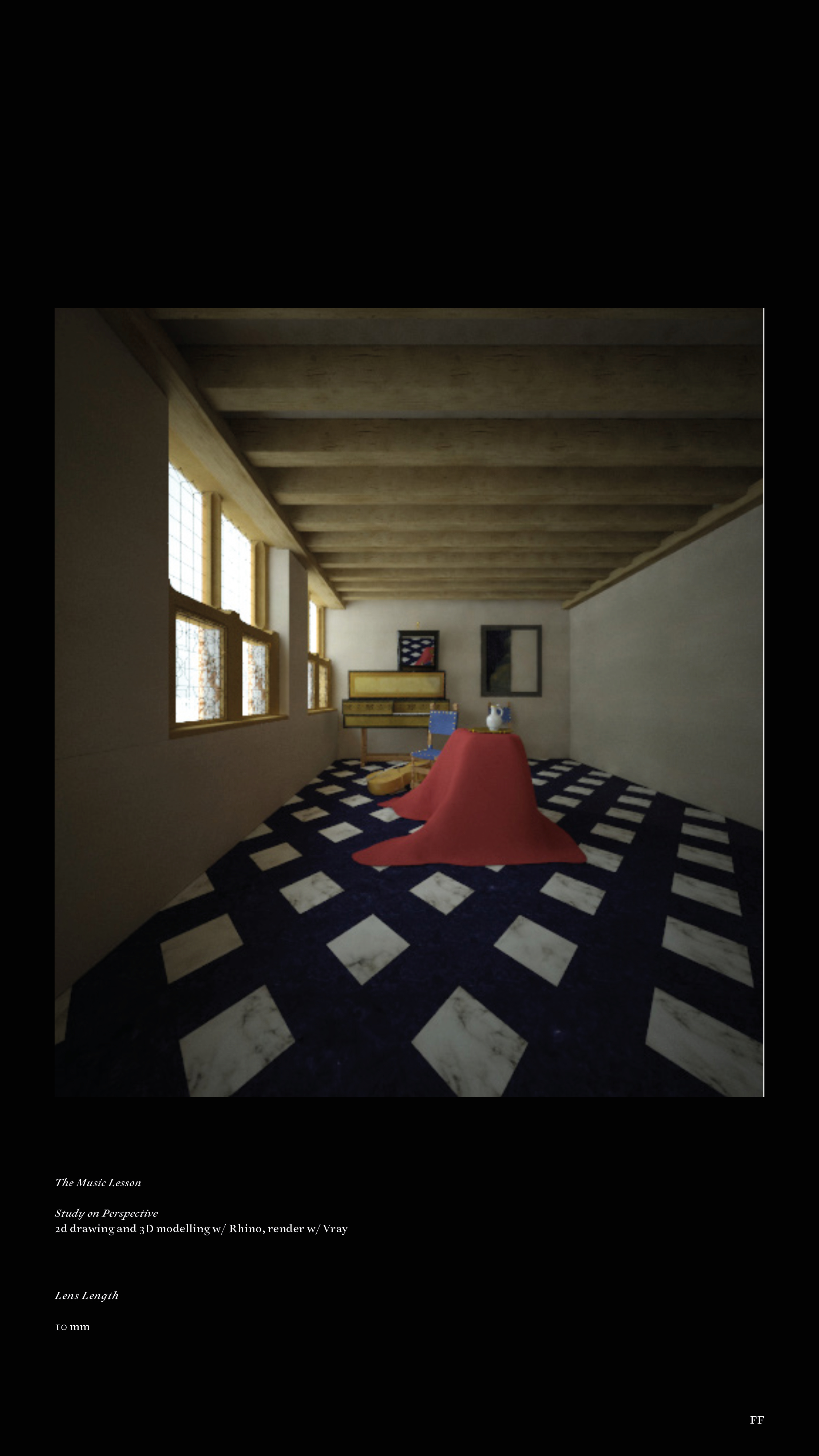
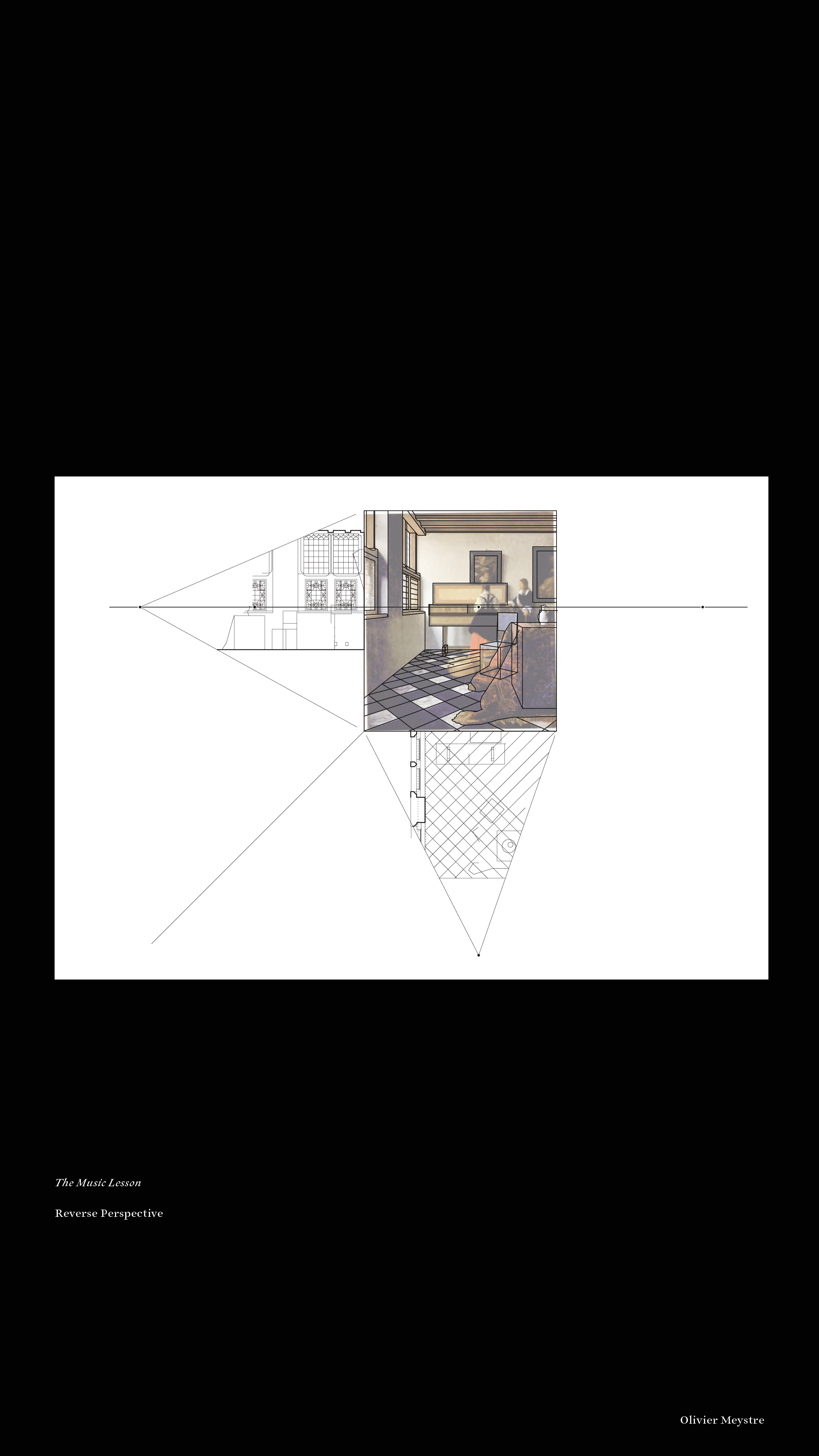
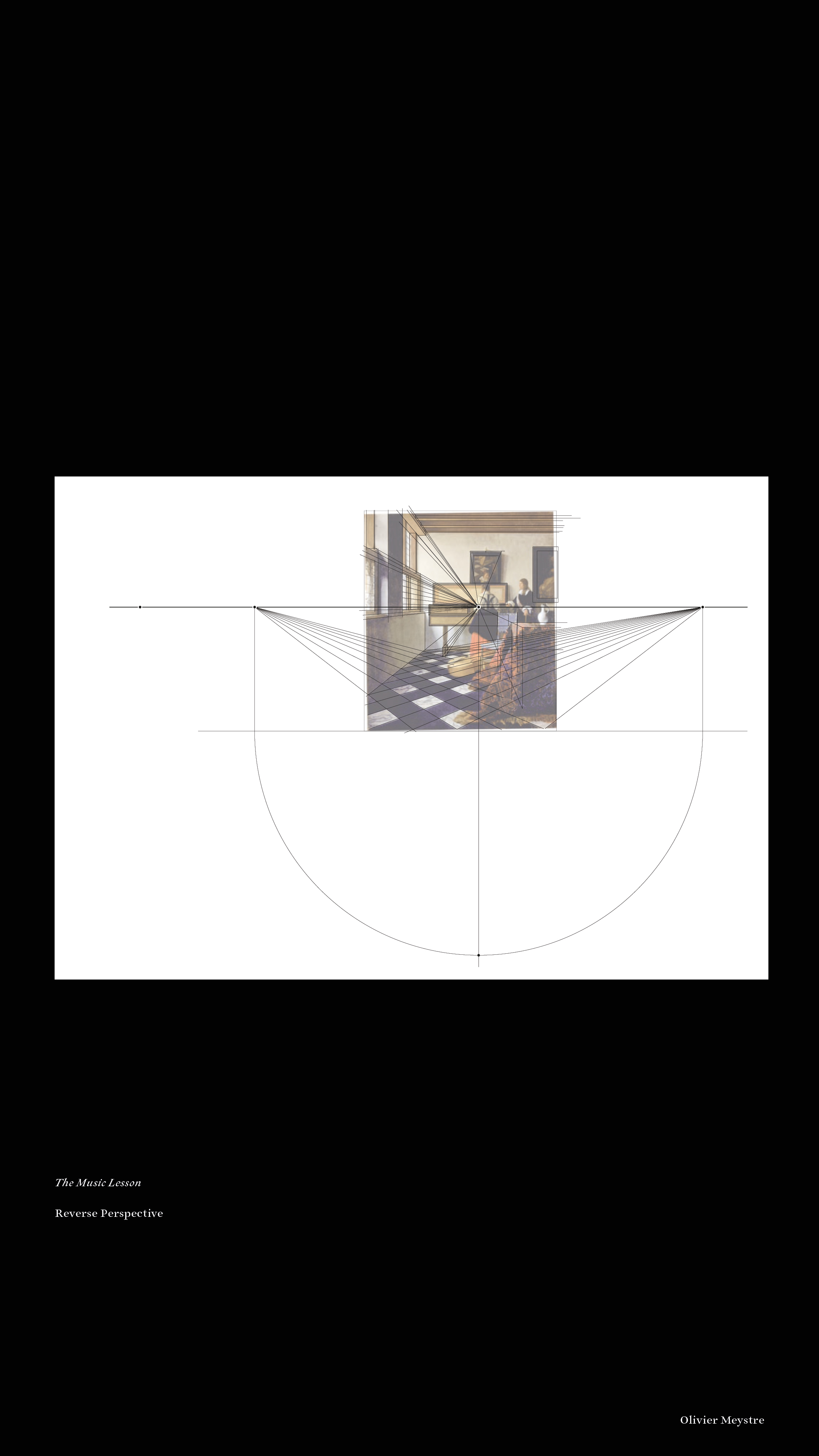
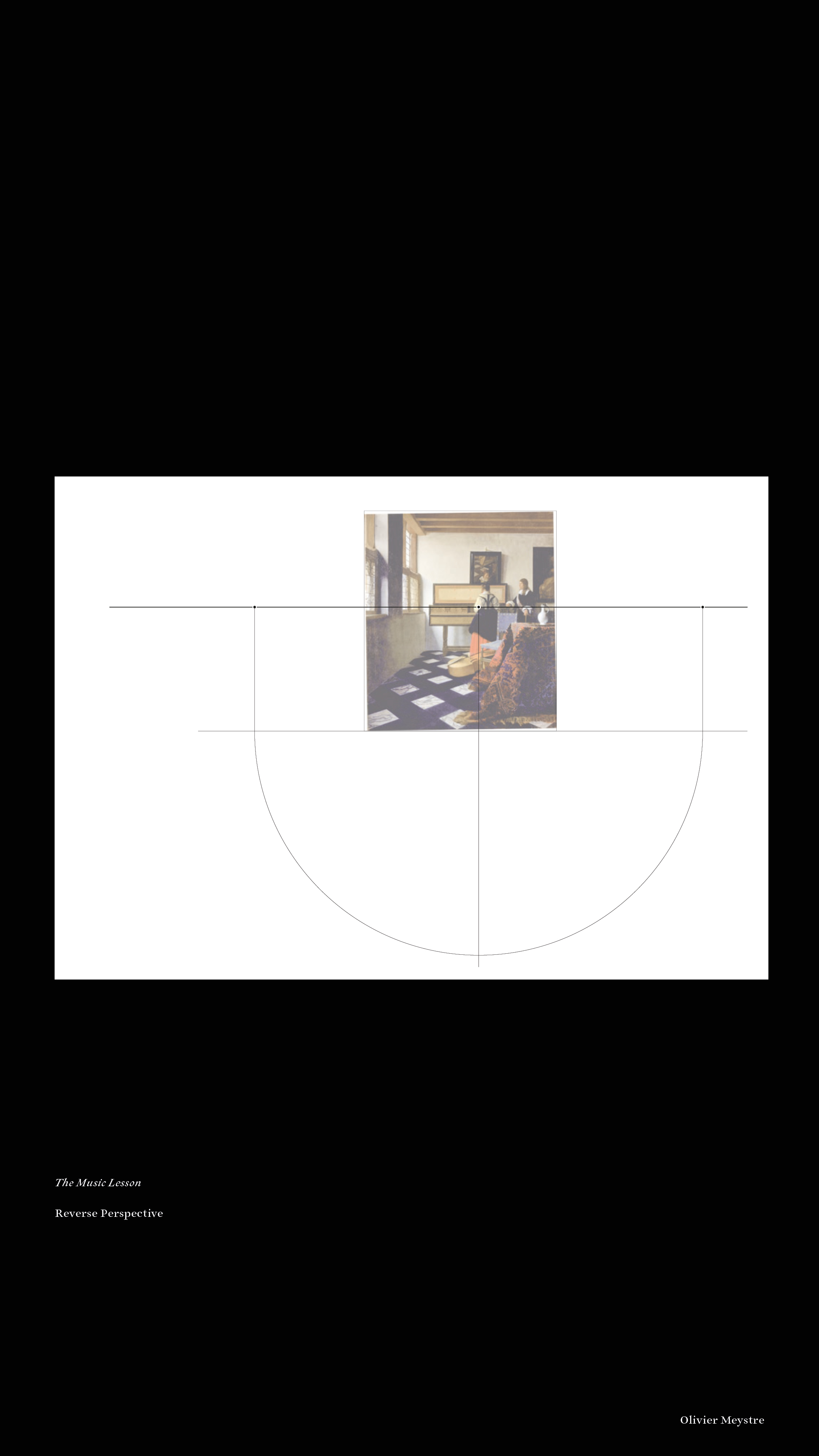
The Visualization Lesson by Johannes Vermeer
École Polytechnique Fédérale De Lausanne - EPFL . CH | Laboratory of Arts for Sciences (LAPIS) | 2018–
The Expressive Figuration course aims to enable students to develop a personal figurative repertoire and acquire a basic knowledge of the history and techniques of representation. Theoretical reflection and practical work are inseparable within the teaching method.
The work undertaken during the semester culminates in the representation of an architectural idea through an allegorical image that is at once realistic and magical, ironic and nostalgic. Each image is conceived as the allegory of an architectural idea. In this sense, the image is a tool of communication. It seeks to convey a position, a thought, a concept, or a feeling. It prompts reflection on the nature of things and occupies the space separating the world of ideas from that of matter.
Fundamental principles are conveyed through theoretical investigations addressing the major questions of architectural representation: composition, proportion, hierarchy, viewpoint, framing, phenomena, temporalities, abstraction, symbolism, and others.
Expressive techniques belonging to the field of art are understood as reflections of the architect’s logical and formal operations and become operative tools for students. The fundamental aim of the course is to help each student construct a personal repertoire of references, open not only to the worlds of architecture, literature, cinema, and the arts more broadly, but also to everyday life and personal memories.
The work undertaken during the semester culminates in the representation of an architectural idea through an allegorical image that is at once realistic and magical, ironic and nostalgic. Each image is conceived as the allegory of an architectural idea. In this sense, the image is a tool of communication. It seeks to convey a position, a thought, a concept, or a feeling. It prompts reflection on the nature of things and occupies the space separating the world of ideas from that of matter.
Fundamental principles are conveyed through theoretical investigations addressing the major questions of architectural representation: composition, proportion, hierarchy, viewpoint, framing, phenomena, temporalities, abstraction, symbolism, and others.
Expressive techniques belonging to the field of art are understood as reflections of the architect’s logical and formal operations and become operative tools for students. The fundamental aim of the course is to help each student construct a personal repertoire of references, open not only to the worlds of architecture, literature, cinema, and the arts more broadly, but also to everyday life and personal memories.
The architectural idea thus acquires expressive form and character through a continuous process of analogy with images both familiar and remote . . .
Working in pairs, students are asked to produce two plausible images based on an assigned painting and a three-dimensional model responding to the following proposition: an interior space, a room—from the Greek καμάρα (kamára) and the Latin camera—containing at least one opening toward the exterior and one toward the interior; that is, a threshold between inside and outside, a snapshot between a before and an after.
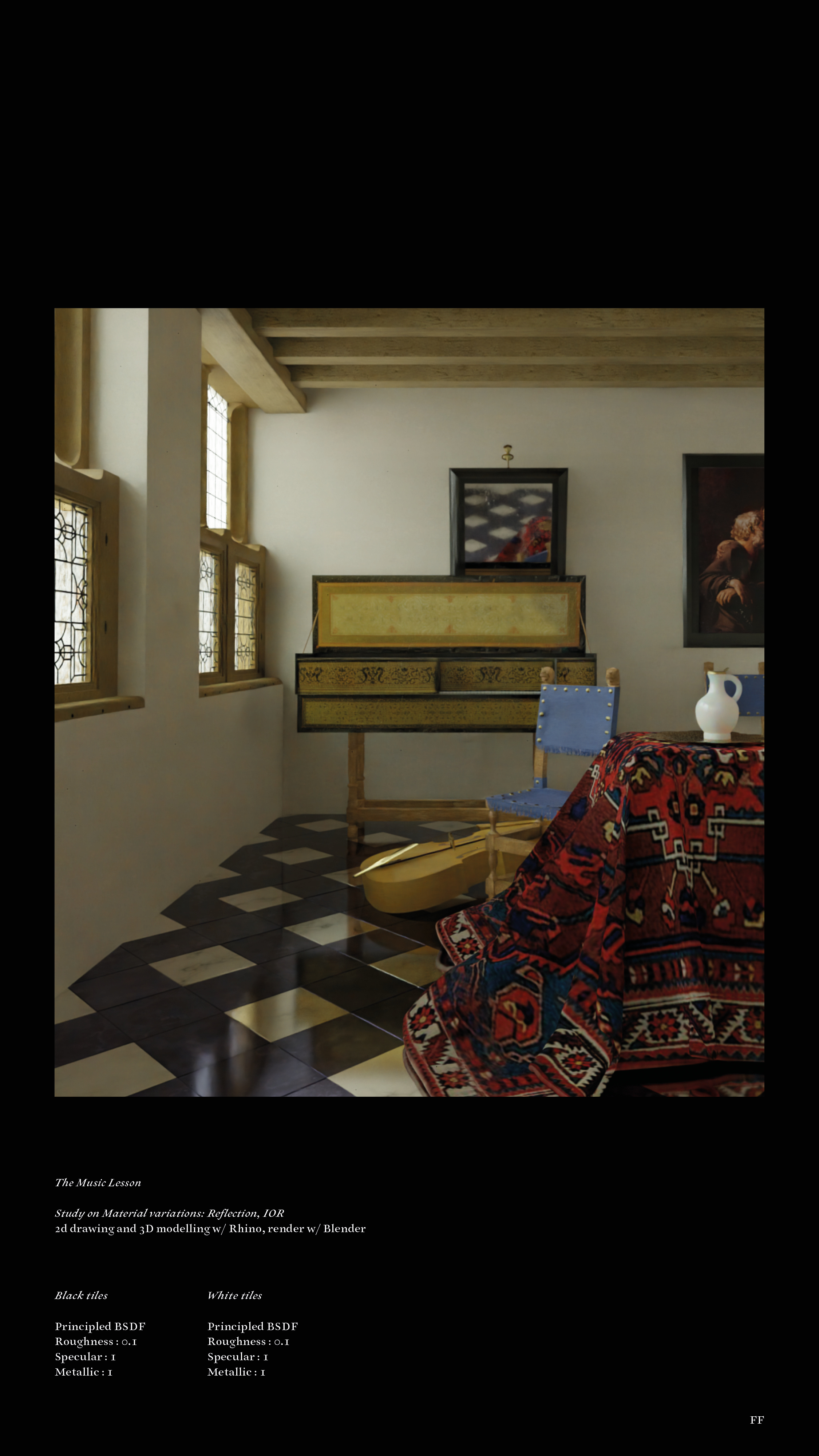
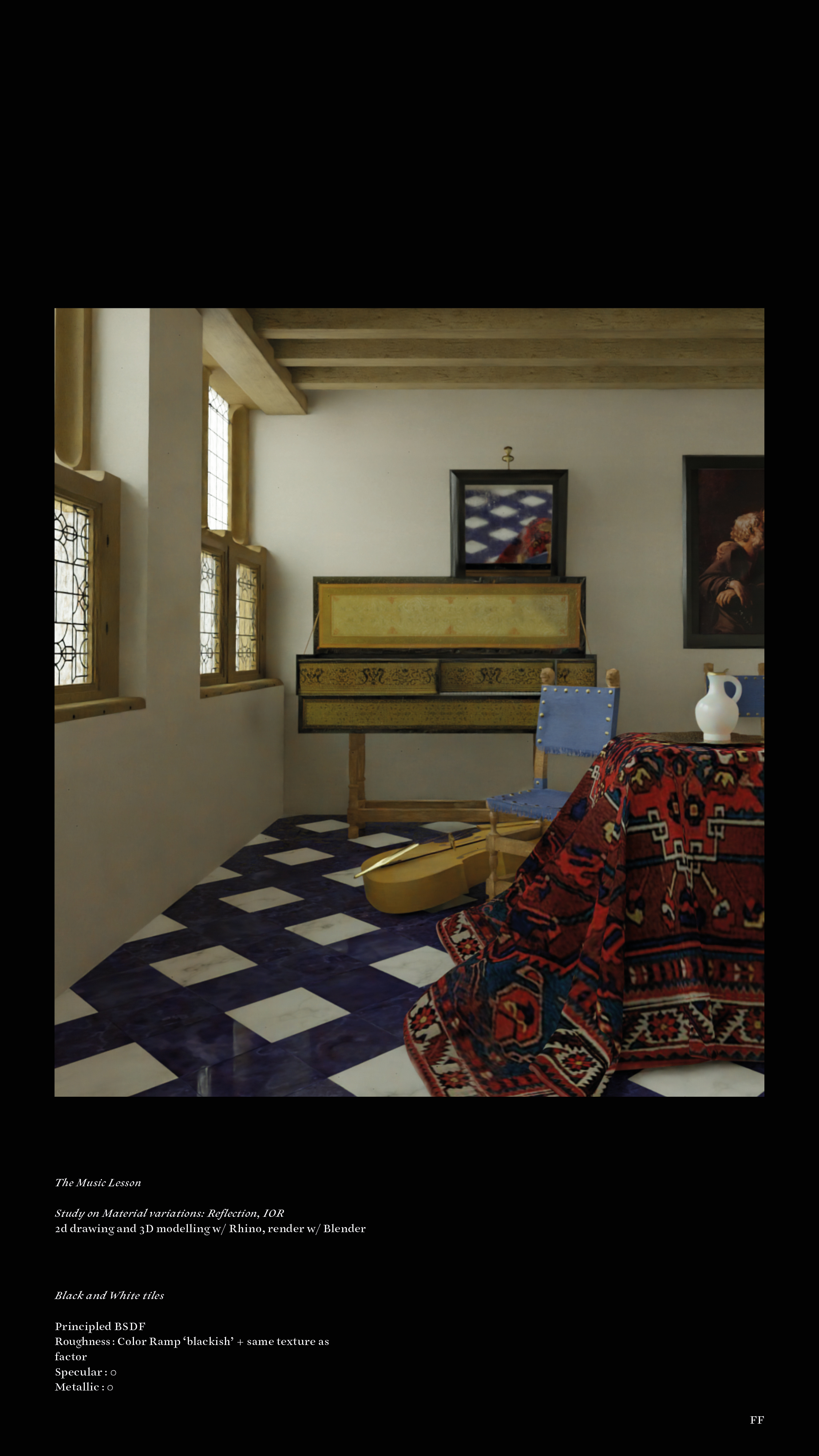
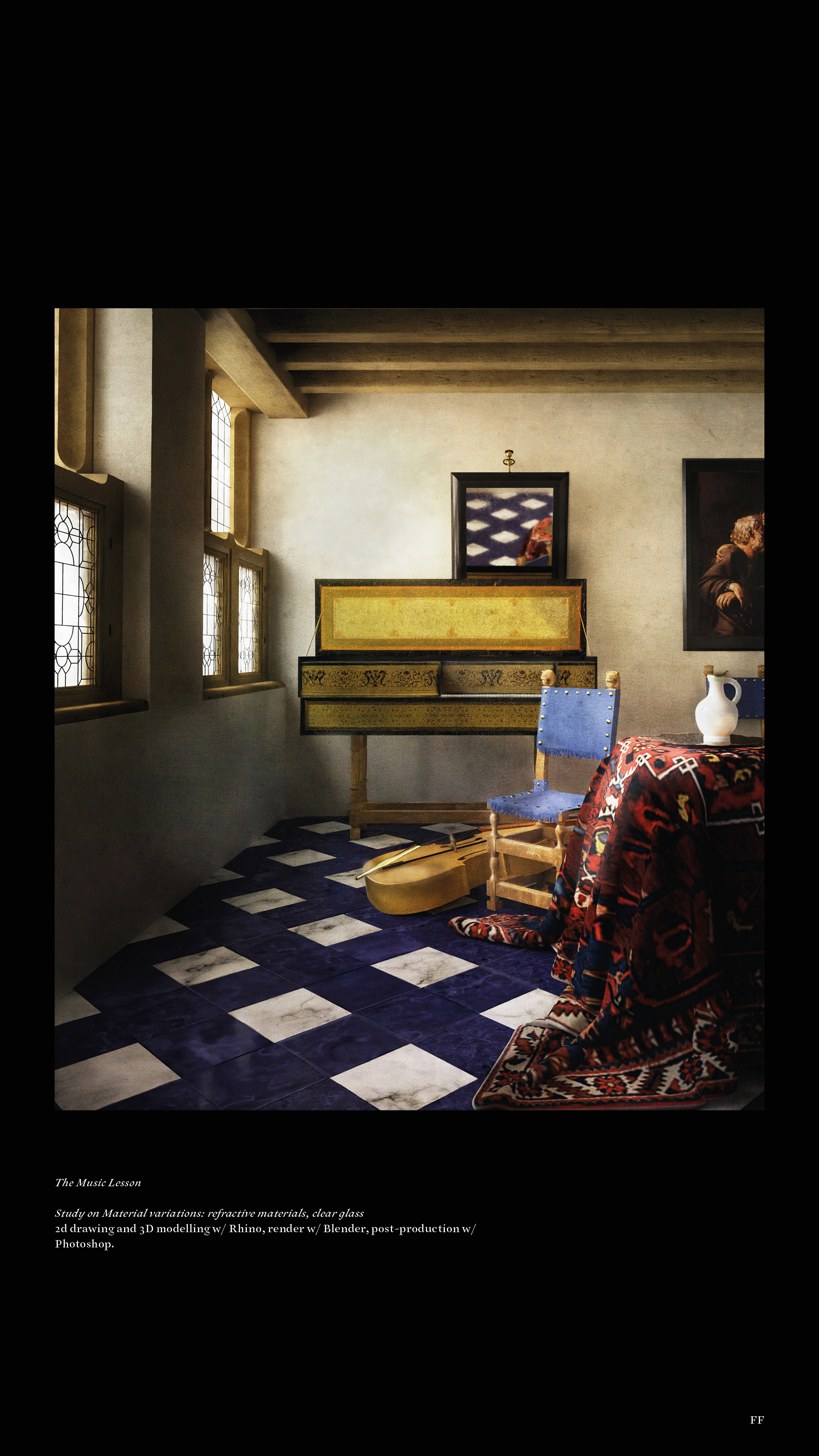
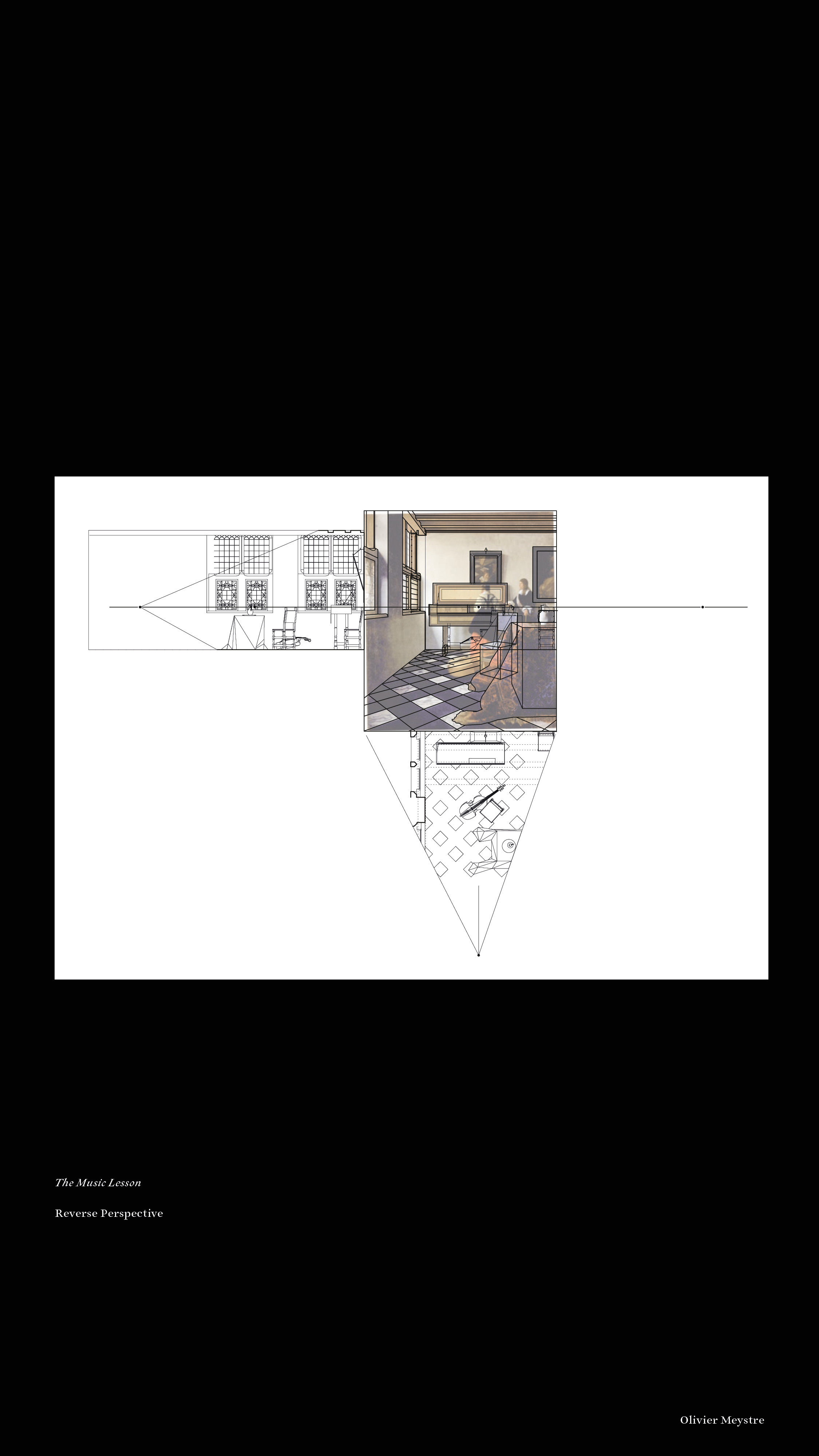
Reconstruction — The first image will consist of a precise, plausible, and realistic reconstruction of the painting, with the exception of human figures and other animals.
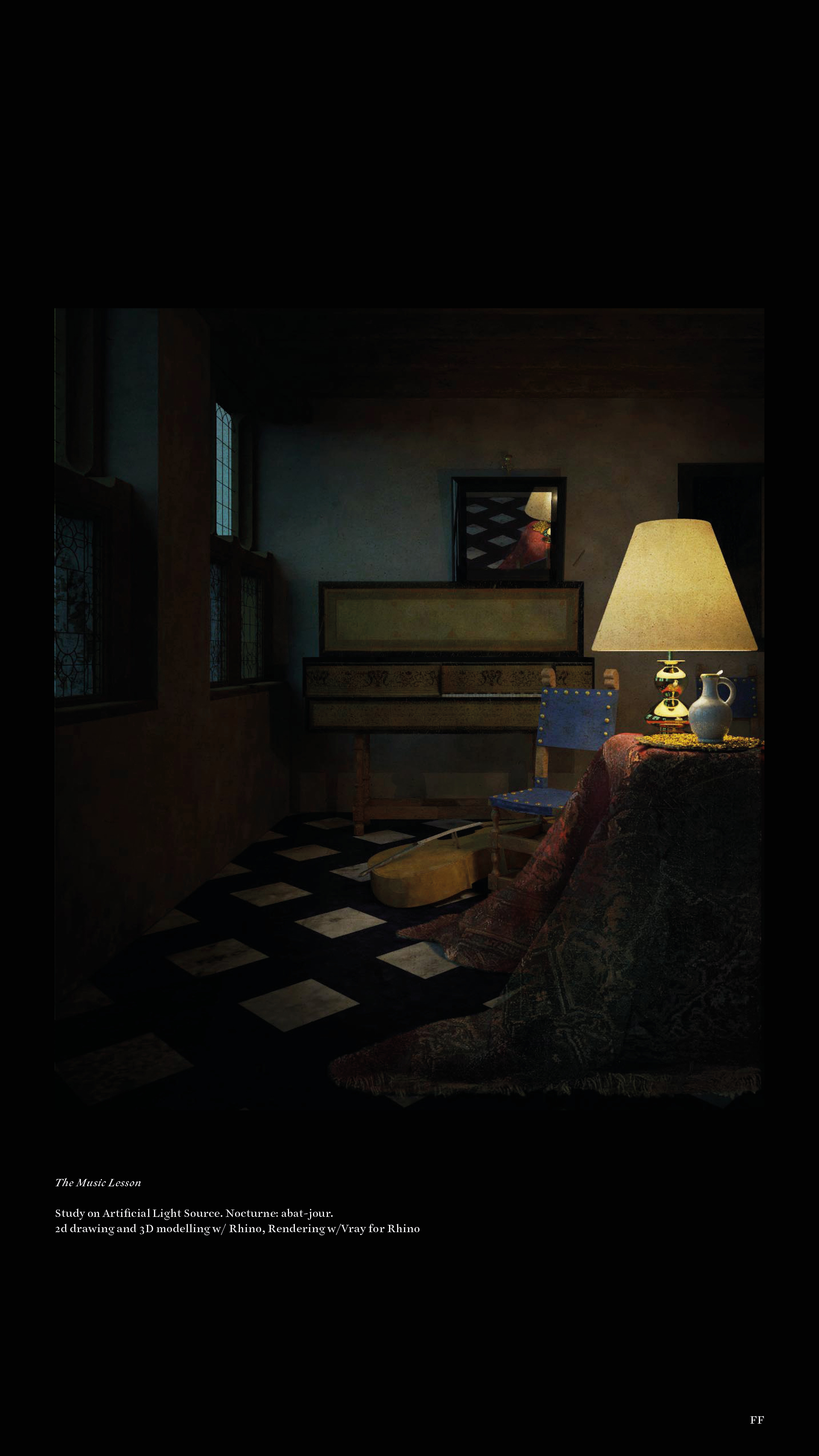
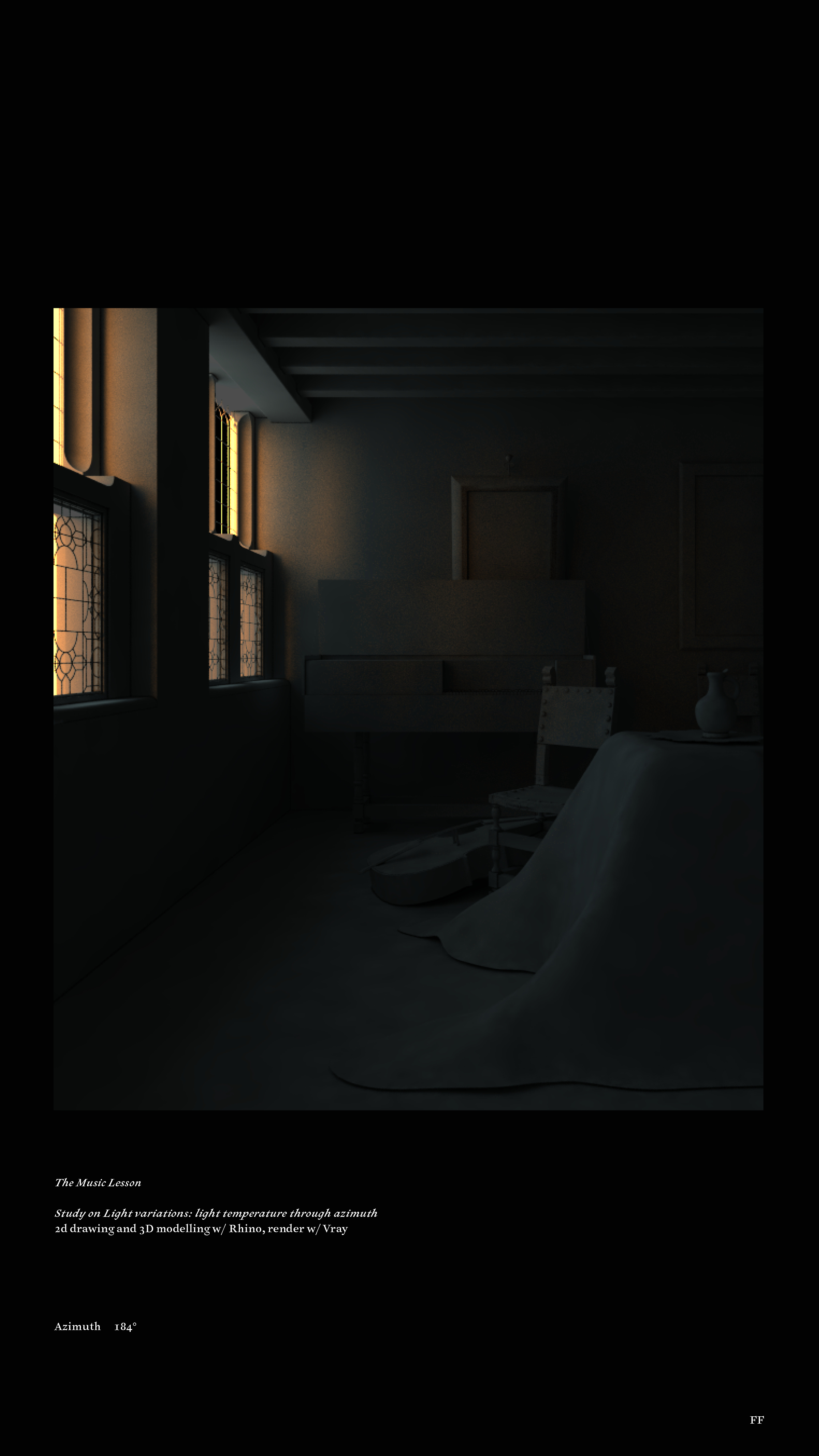
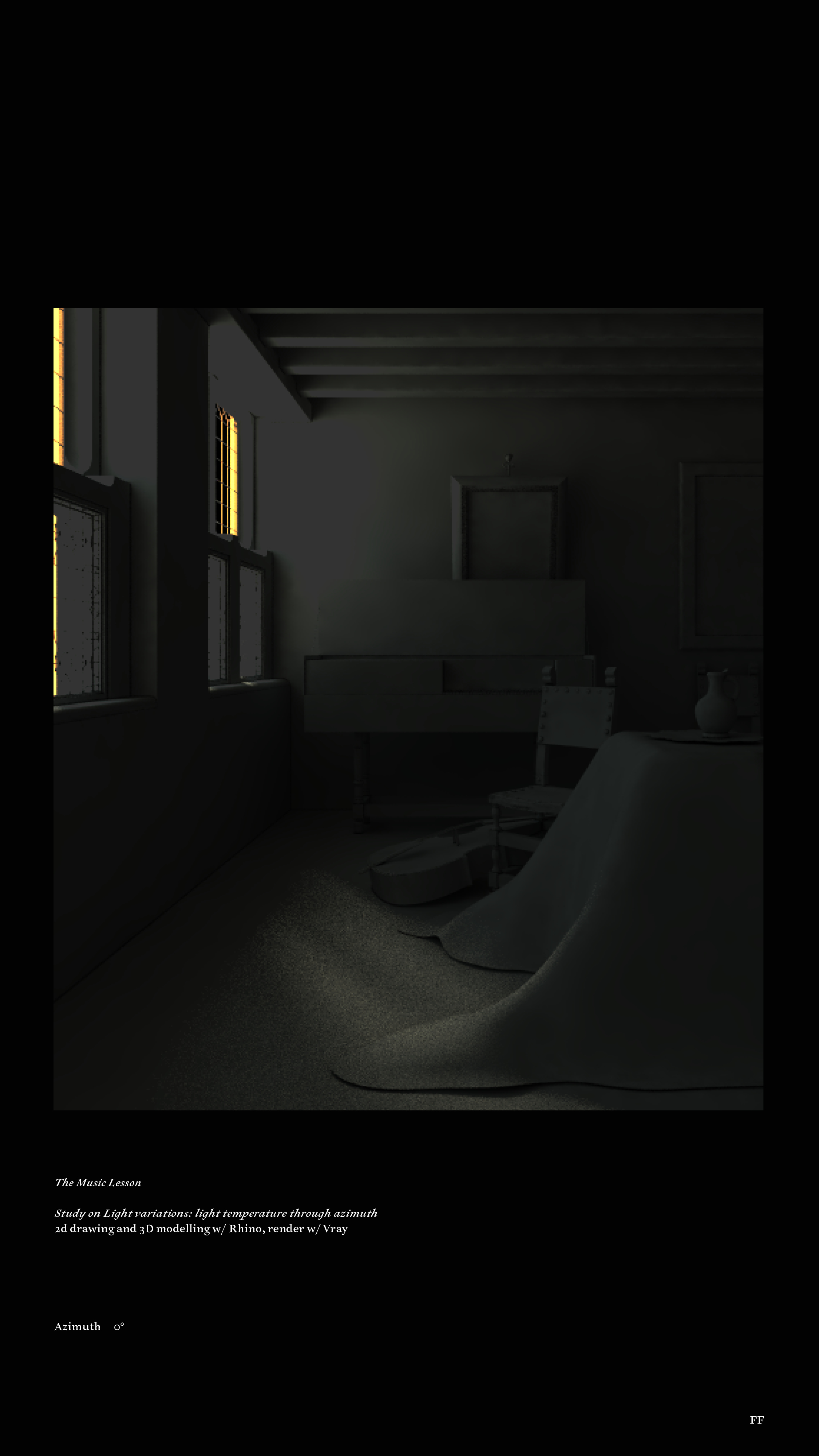
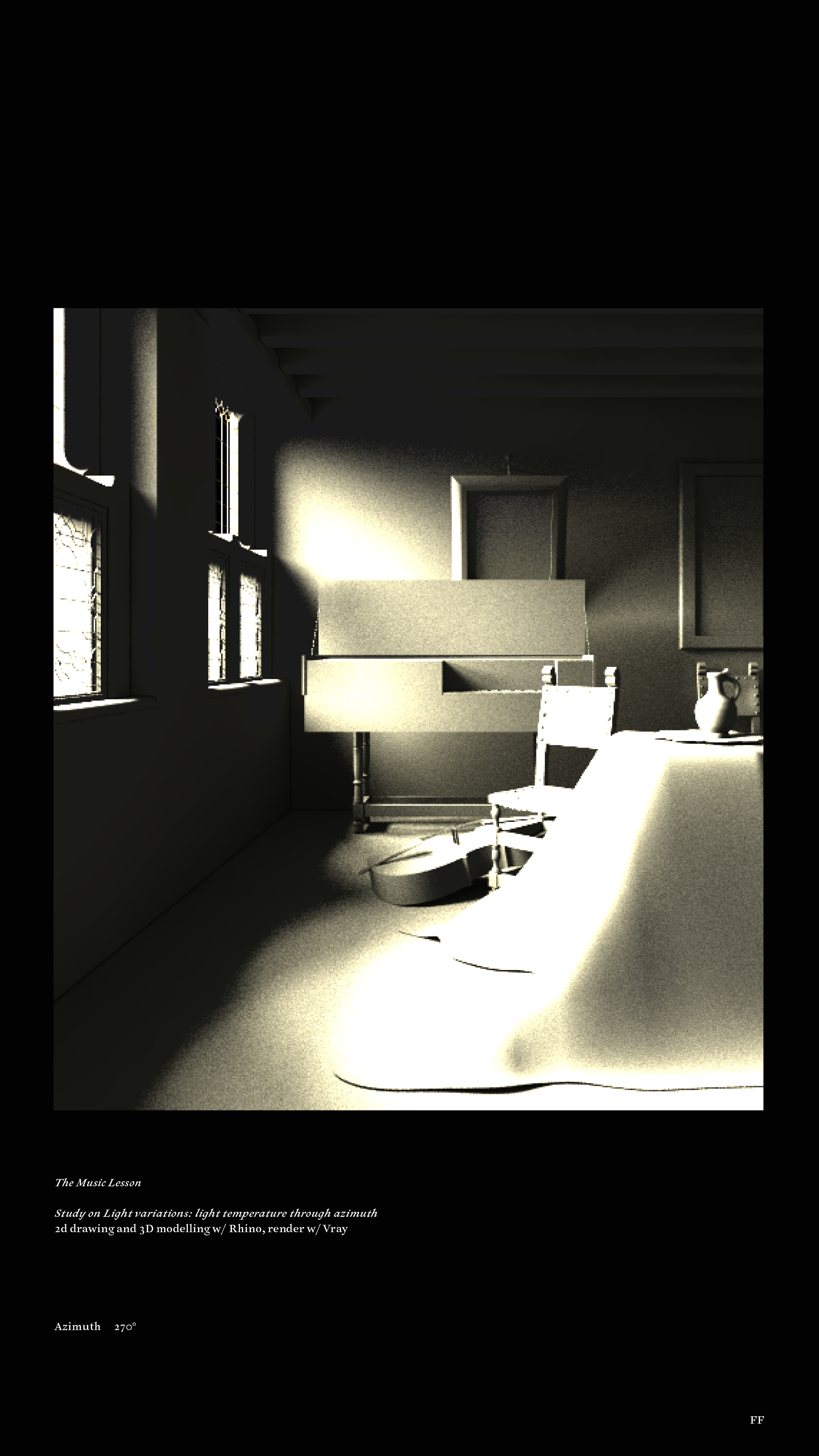
Recomposition — The second image will propose a new composition based on the assigned painting, modifying one or more of its characteristics, such as perspective, viewpoint, framing, lighting, and so forth.
Working in pairs, students are asked to produce two plausible images based on an assigned painting and a three-dimensional model responding to the following proposition: an interior space, a room—from the Greek καμάρα (kamára) and the Latin camera—containing at least one opening toward the exterior and one toward the interior; that is, a threshold between inside and outside, a snapshot between a before and an after.
Reconstruction — The first image will consist of a precise, plausible, and realistic reconstruction of the painting, with the exception of human figures and other animals.
Recomposition — The second image will propose a new composition based on the assigned painting, modifying one or more of its characteristics, such as perspective, viewpoint, framing, lighting, and so forth.